The Best Varieties for Windbreaks
April 2025
The Best Plant Varieties for Pots and Planters
April 2025

The true value of a tree is most evident during the summer months. During the hot season, especially during increasingly frequent heat waves, the shade from a tree’s canopy makes the difference between being able to enjoy a garden or not. Therefore, planting a tree in the garden, beyond its environmental and air quality benefits, provides immediate and tangible advantages for those who plant it.
Below are the trees we believe perform this function best, divided into large, medium, and small garden trees, based on their adult size.
Trees for Large Gardens
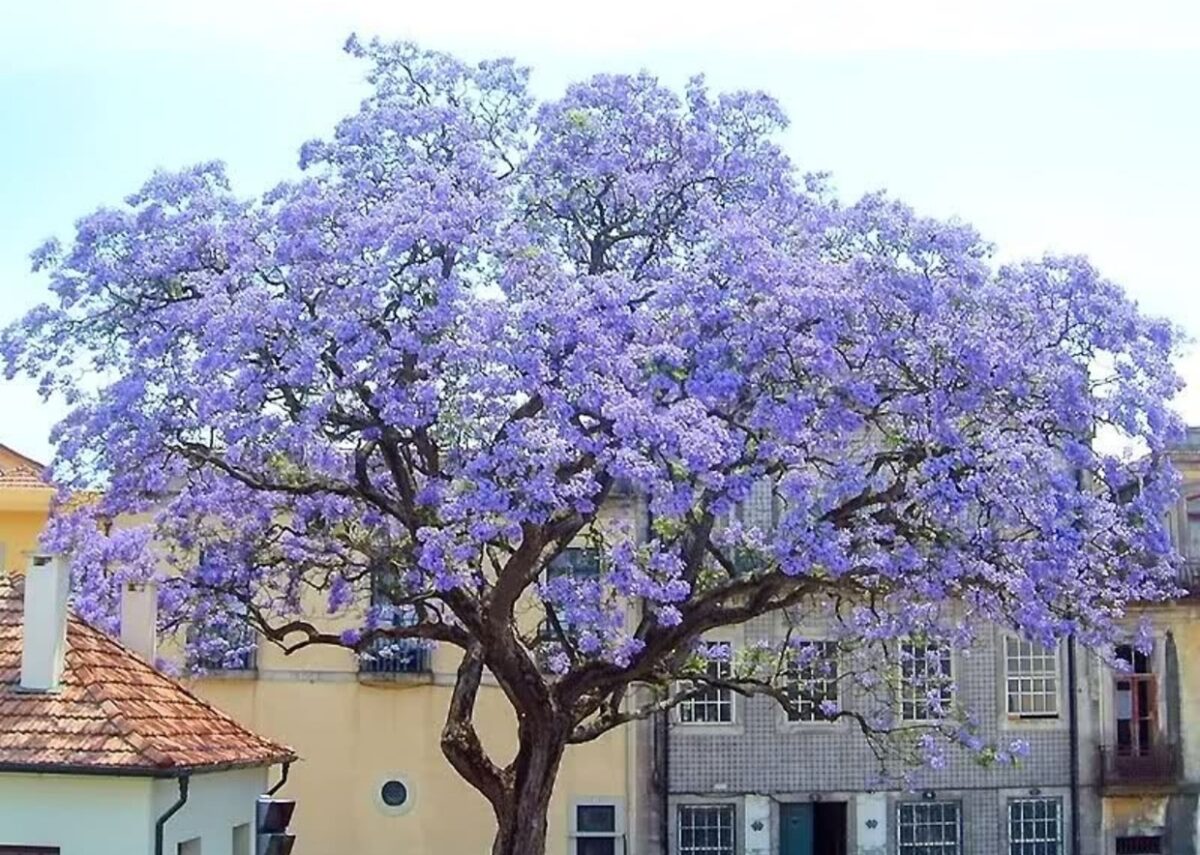
Paulownia tomentosa
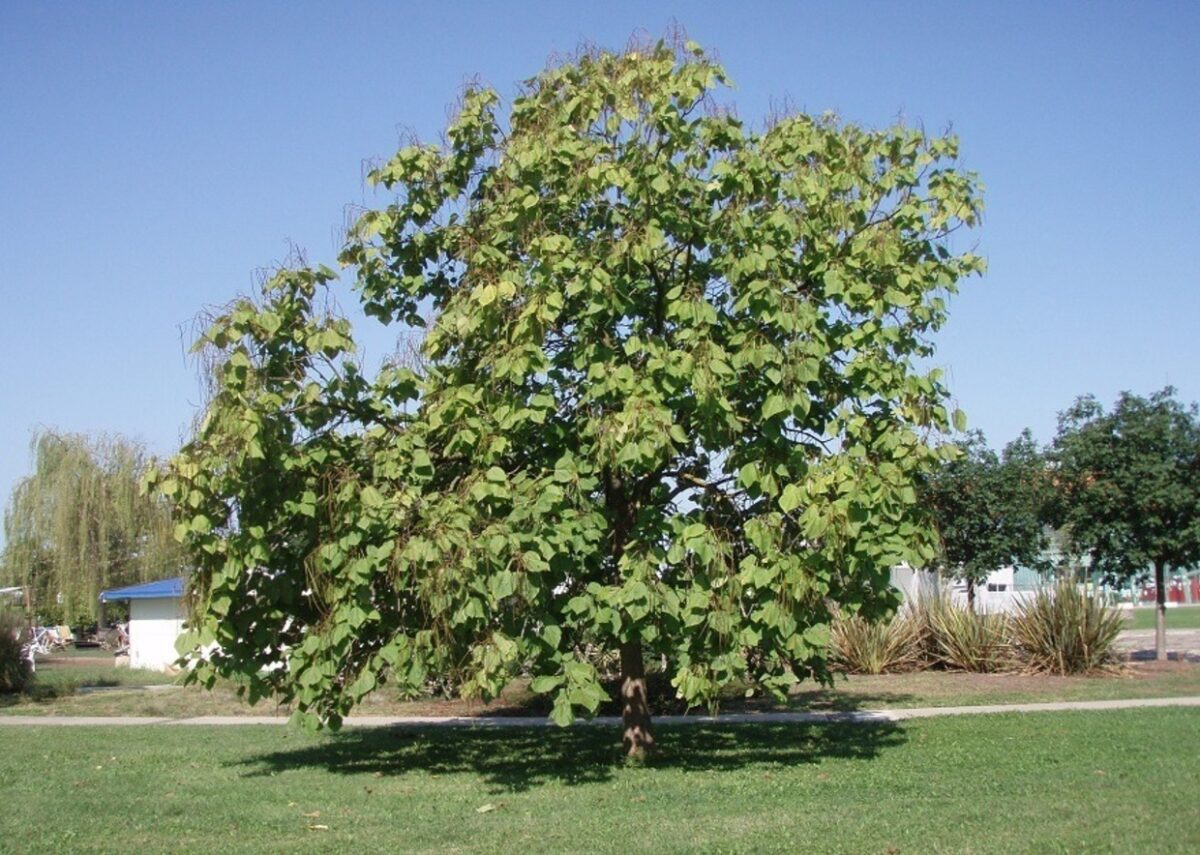
Deciduous; H. 10–15 m, W. 8–10 m
Paulownia is an imposing tree, notable for its extremely fast growth. For the same trunk circumference, Paulownia grows taller than almost any other species. Its canopy is broad, with large, smooth leaves. Its flowering is also very attractive, with upright panicles of fragrant purple flowers appearing in April–May.
Catalpa bignonioides
Deciduous; H. 10–15 m, W. 10 m
Catalpa is similar in many ways to Paulownia. It also has very large leaves, a broad canopy, and rapid growth. It adapts to any soil type, with white-yellowish flowers blooming in June–July.
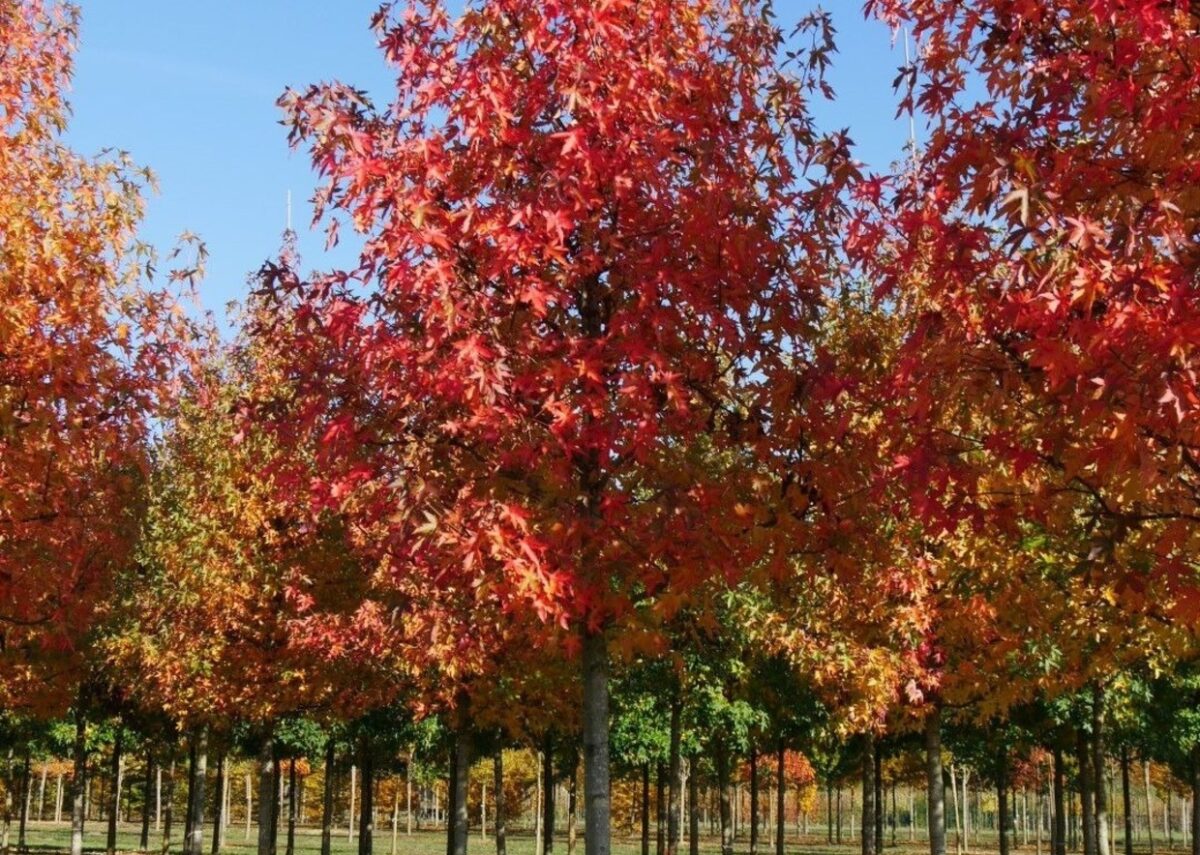
Liquidambar styraciflua
Deciduous; H. 20–25 m, W. 6–12 m
Known for its stunning autumn foliage, Liquidambar displays green, yellow, orange, red, and dark red leaves simultaneously. Its dense and tall canopy makes it excellent for shading large areas.
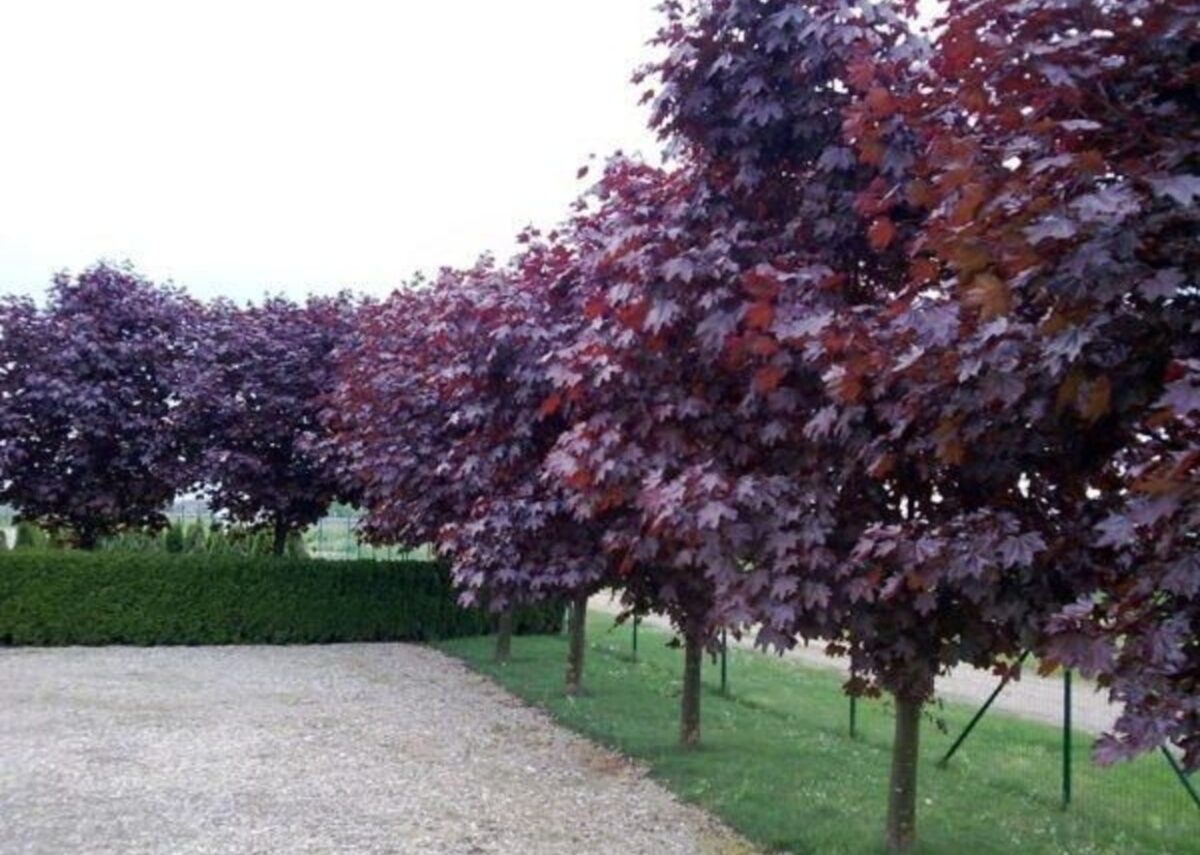
Acer platanoides ‘Crimson King’
Deciduous; H. 12–15 m, W. 6–8 m
Notable for its dark red, almost black leaves, this tree brings striking color to the garden from spring through autumn.
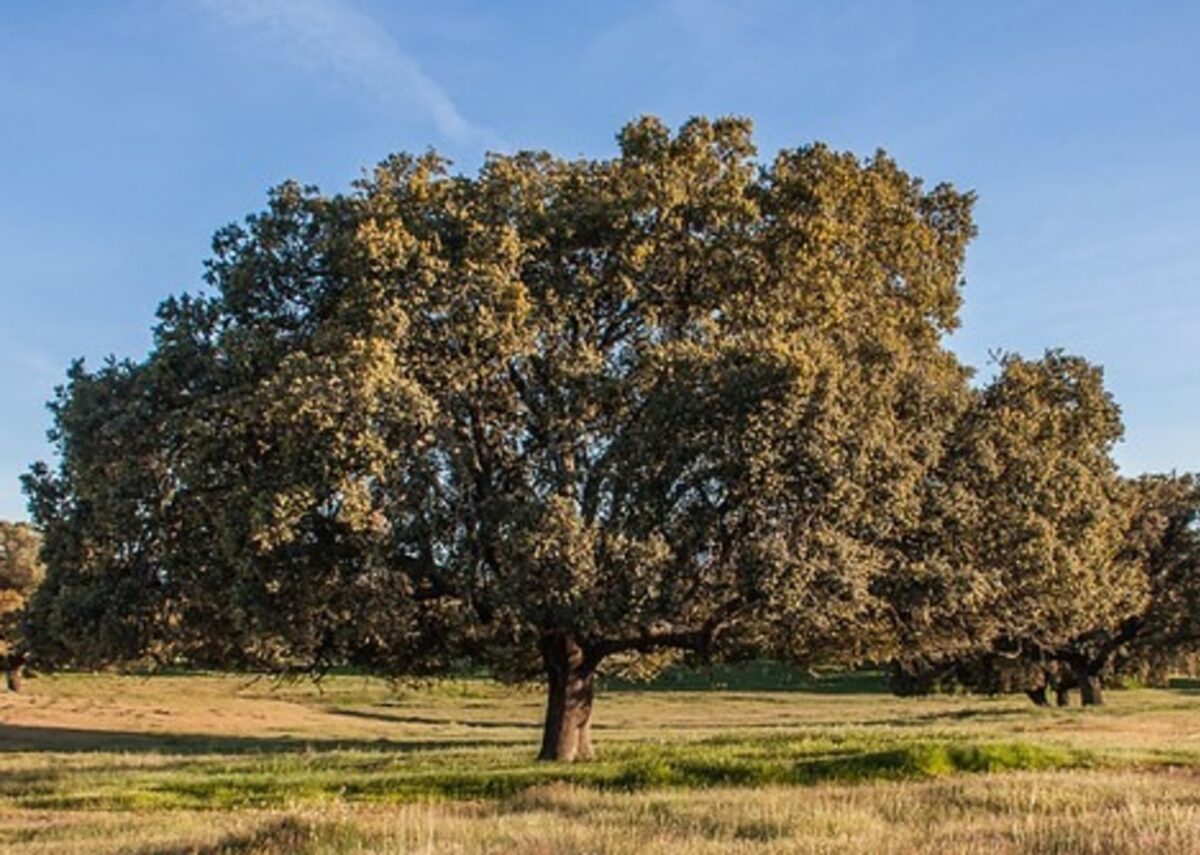
Quercus ilex
Evergreen; H. 20–25 m, W. 15–20 m
The Holm Oak is widely planted, with medium-fast growth. Over time, it becomes very large, and its canopy spreads to create ample shaded areas, as seen in many public parks and gardens.
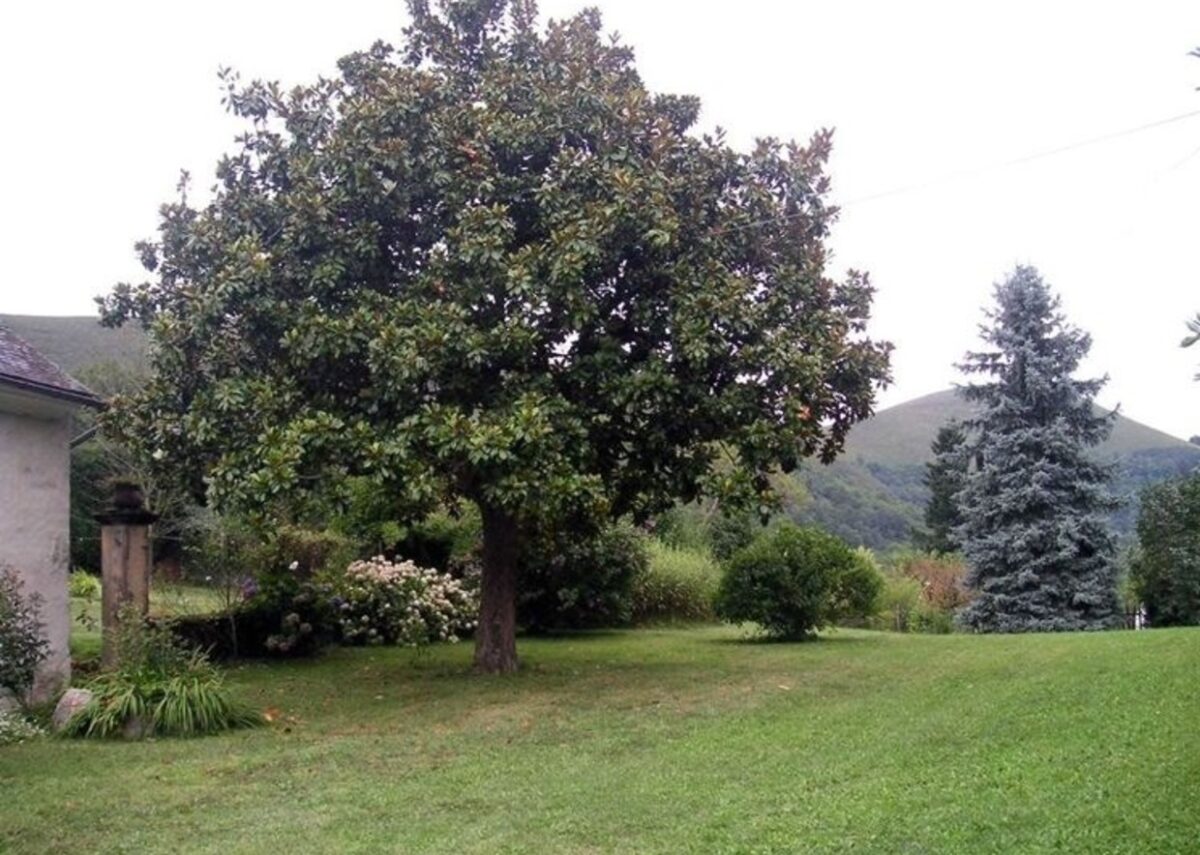
Magnolia grandiflora ‘Gallisoniensis’
Evergreen; H. 15–20 m, W. 8–12 m
Suitable for large and medium gardens, though in medium gardens it requires more frequent pruning to maintain canopy size. Produces large white flowers in summer.
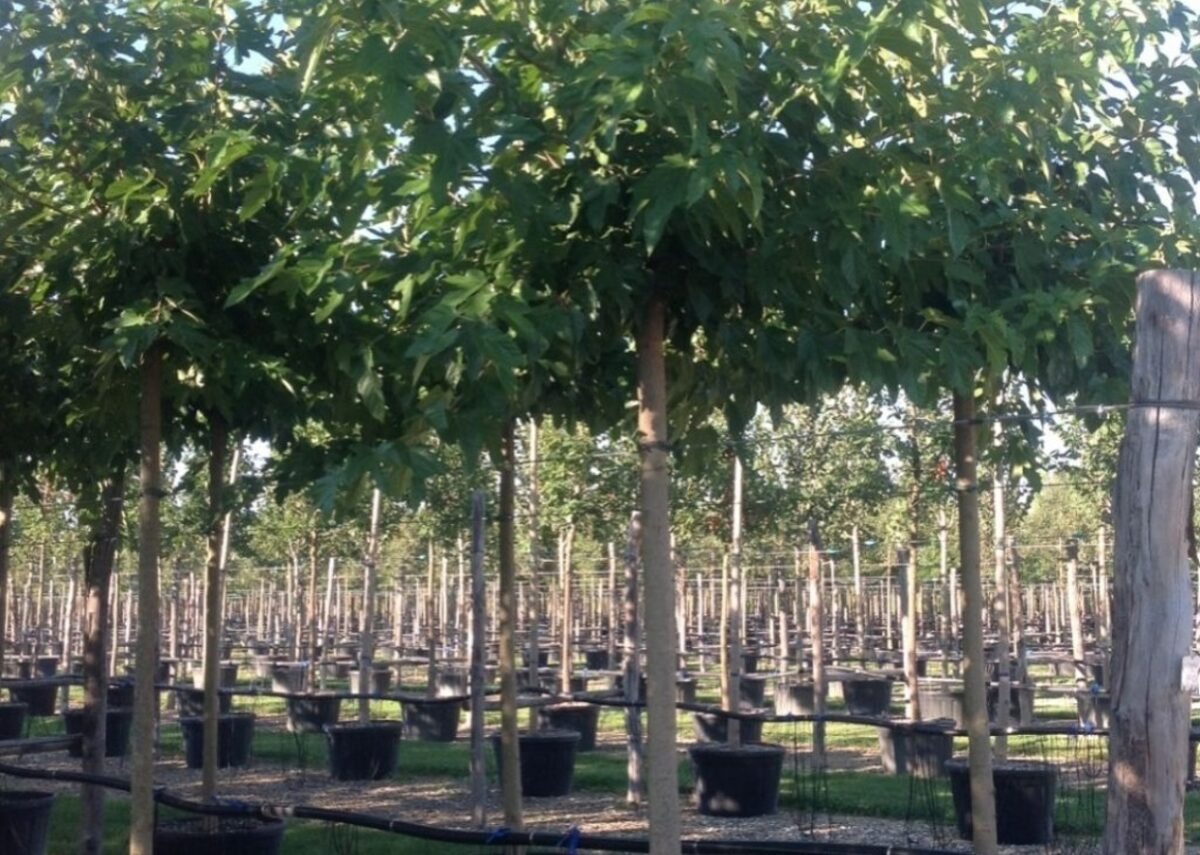
Morus platanifolia ‘Fruitless’
Deciduous; H. 6–8 m, W. 4–6 m
Not just a shade tree—this is the shade tree. Its expansive canopy quickly creates large shaded areas with horizontal branches. Commonly used in parking areas and coastal zones, its wide growth allows pruning from the ground or a simple ladder, without aerial platforms.
A sterile variety is preferred to avoid messy fruits, but Morus alba can be used if fruit is not an issue.
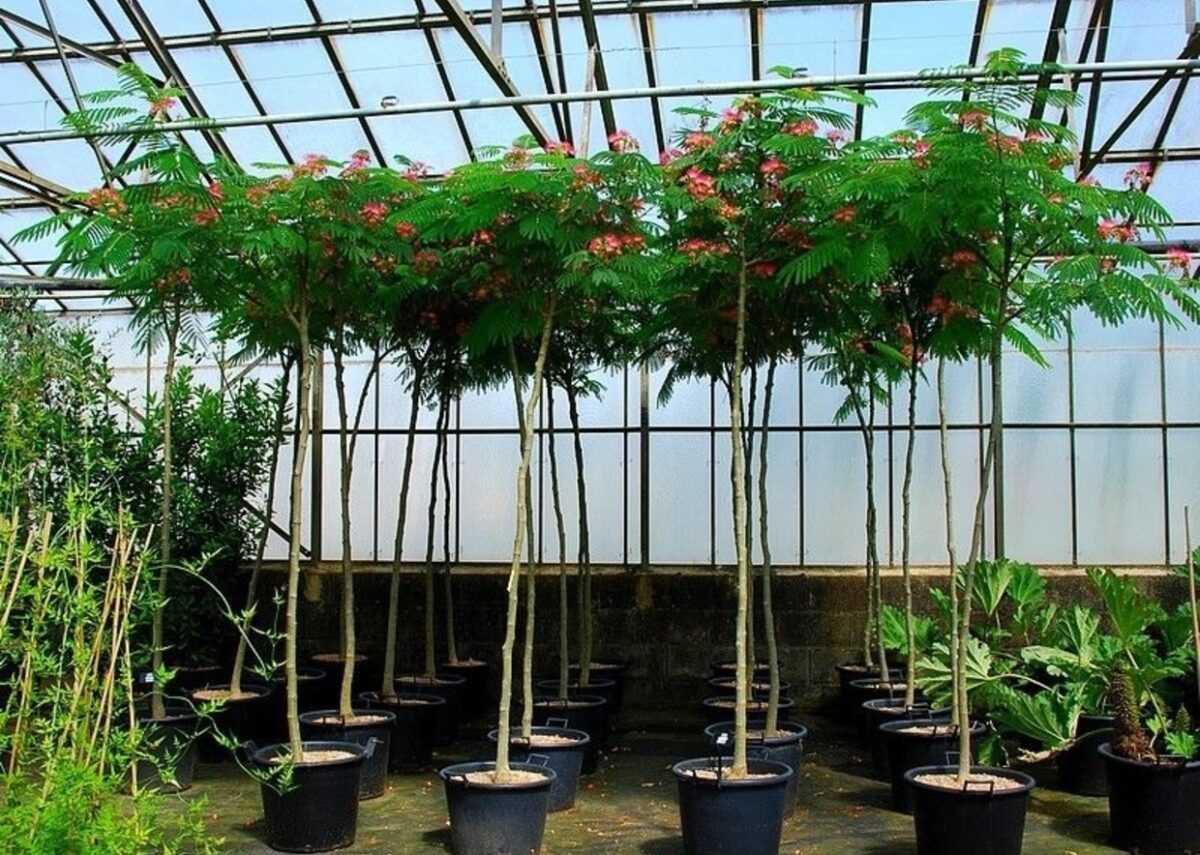
Albizia julibrissin ‘Ombrella’
Deciduous; H. 8–10 m, W. 4–6 m
L’Albizia è una pianta dalla chioma a cupola e dalla fioritura estiva abbondante e continua. Grazie alle sue ramificazioni larghe e alle sue foglioline crea zone di ombra molto larghe, anche se meno fitte di altre varietà. Abbiamo scelto la varietà ‘Ombrella’ per questa lista poiché ha la crescita leggermente più lenta, e la fioritura più accesa.
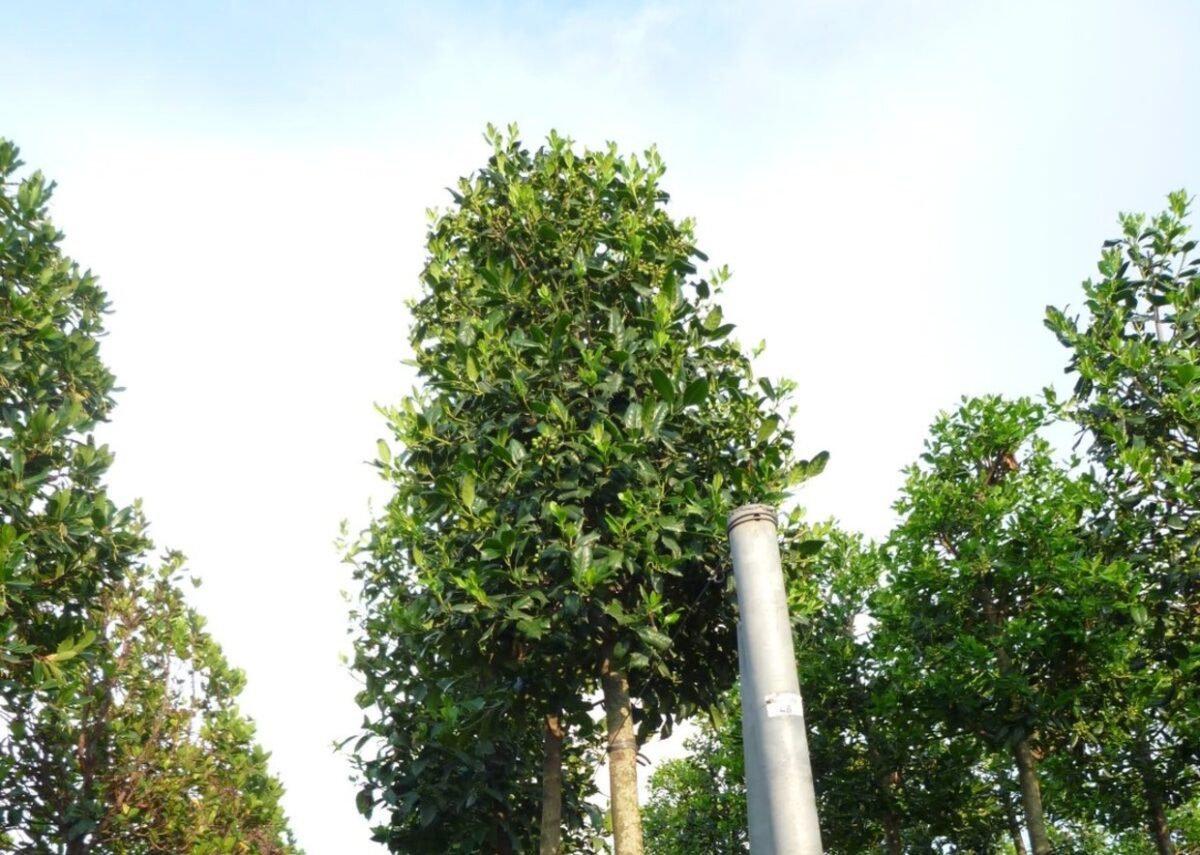
Ilex mutchagara ‘Nellie Stevens’
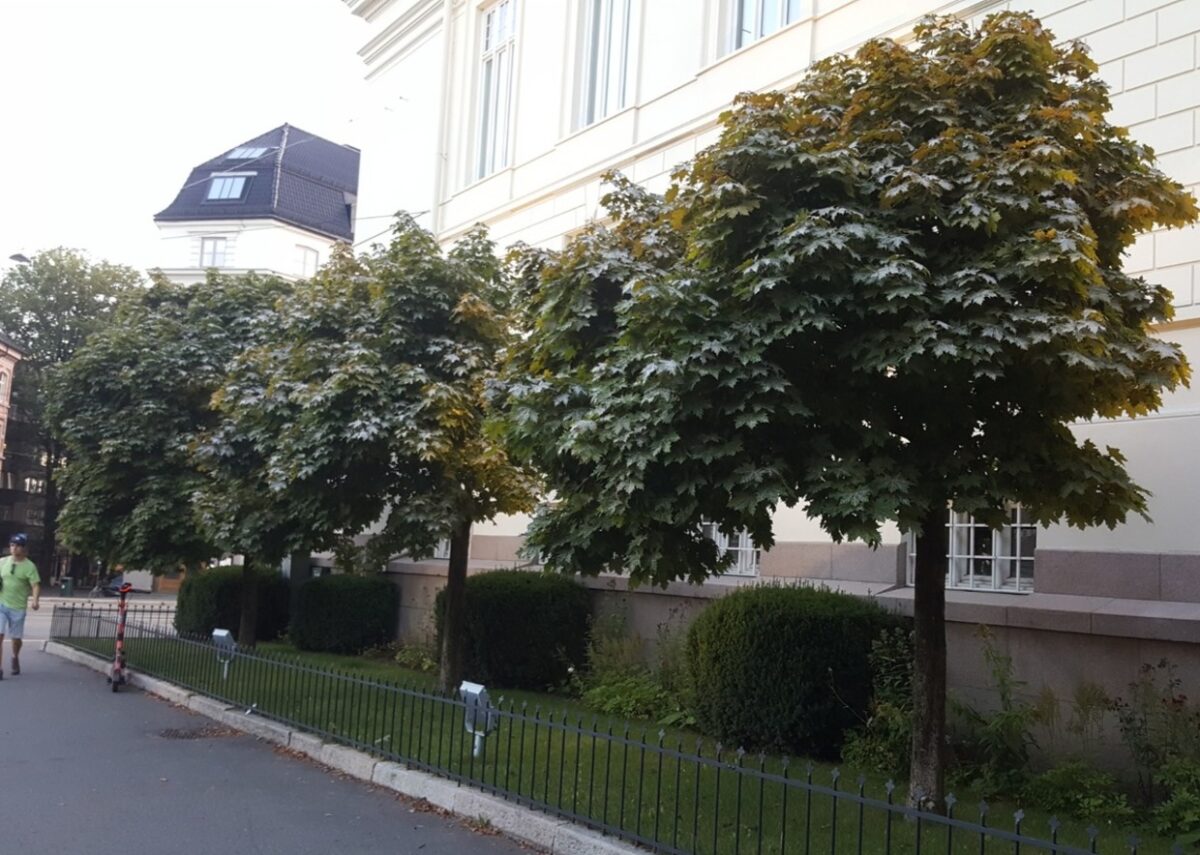
Evergreen; H. 6–8 m, W. 3–5 m
A holly-type tree with spiny-edged leaves and red berries in winter. Fast-growing and responds well to pruning.
Trees for Small Gardens
Acer platanoides ‘Globosum’
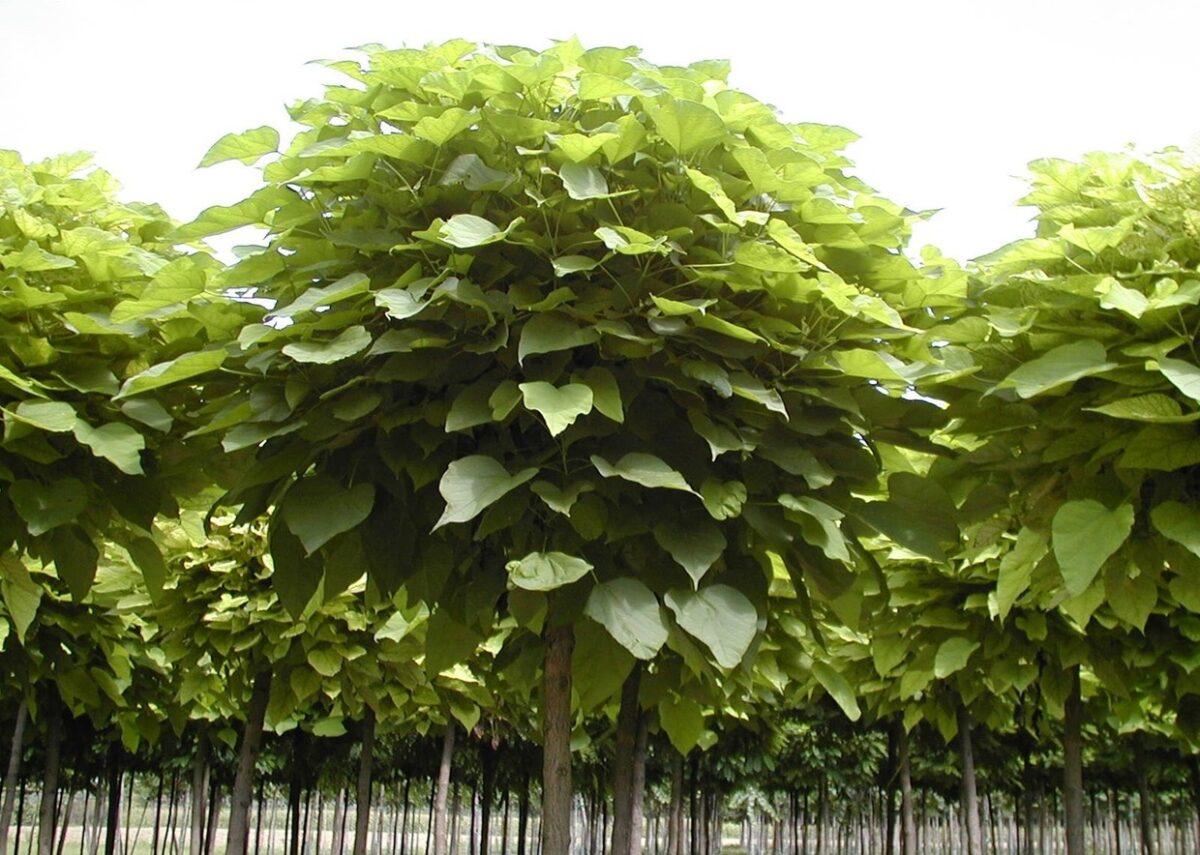
Deciduous; H. 5–7 m, W. 3–4 m
Compact, rounded maple with dark yellow autumn leaves. Very tolerant of urban pollution.
Catalpa ‘Bungei’
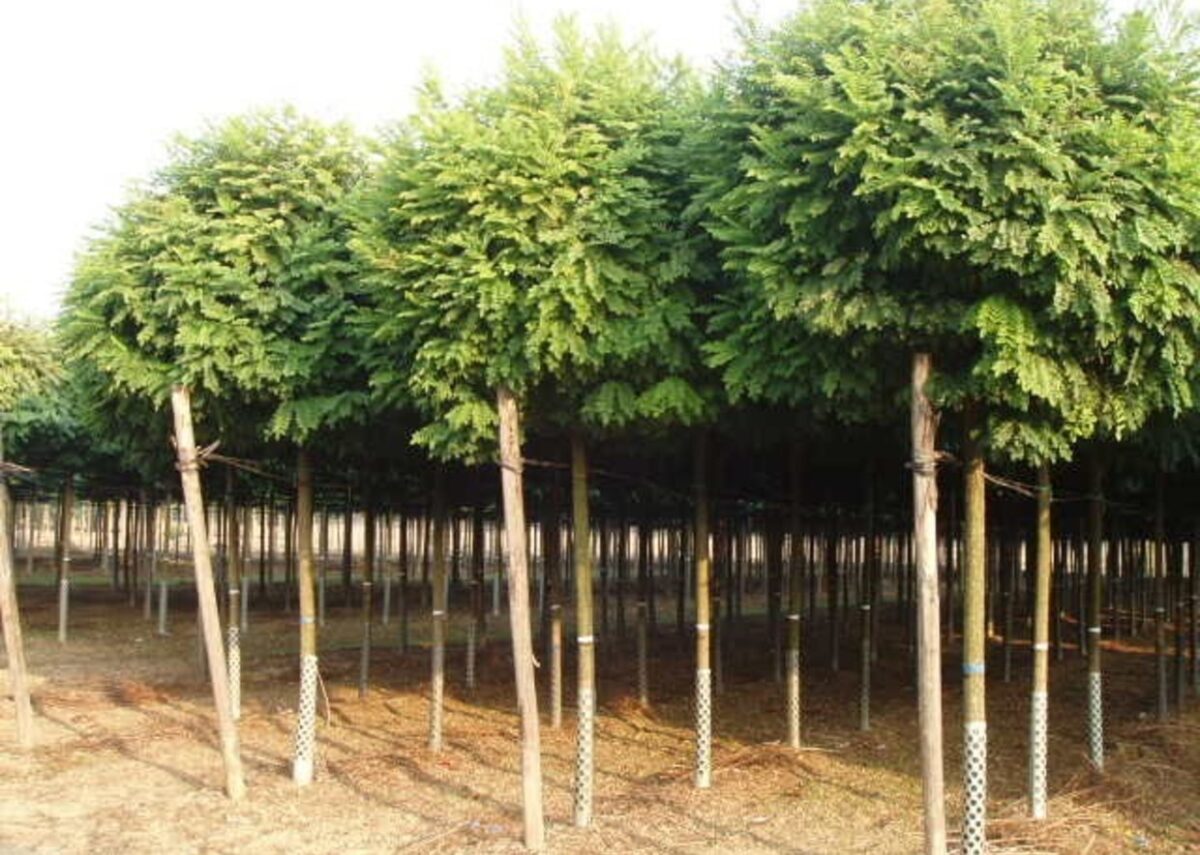
Deciduous; H. 4–6 m, W. 3–5 m
A dwarf Catalpa with a rounded canopy requiring no pruning, and no flowering.
Robinia ‘Umbraculifera’
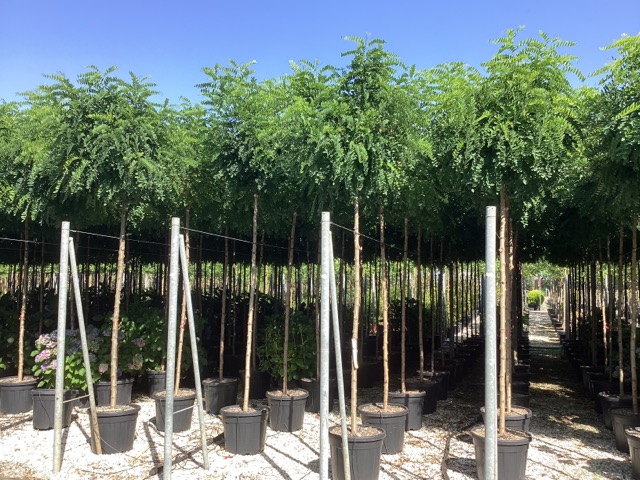
Deciduous; H. 5–6 m, W. 4–5 m
A compact, non-invasive, thornless, non-flowering version of Robinia pseudoacacia. Dense, rounded canopy, max width 4–5 m. Can be pruned in late winter, tolerates paved areas and grows well in calcareous soil.